

Sarcopenia | Muscle decline due to age
Sarcopenia is the progressive, involuntary loss of muscle and function in the body. Not pretty, but you need to read about it and understand how to avoid it.
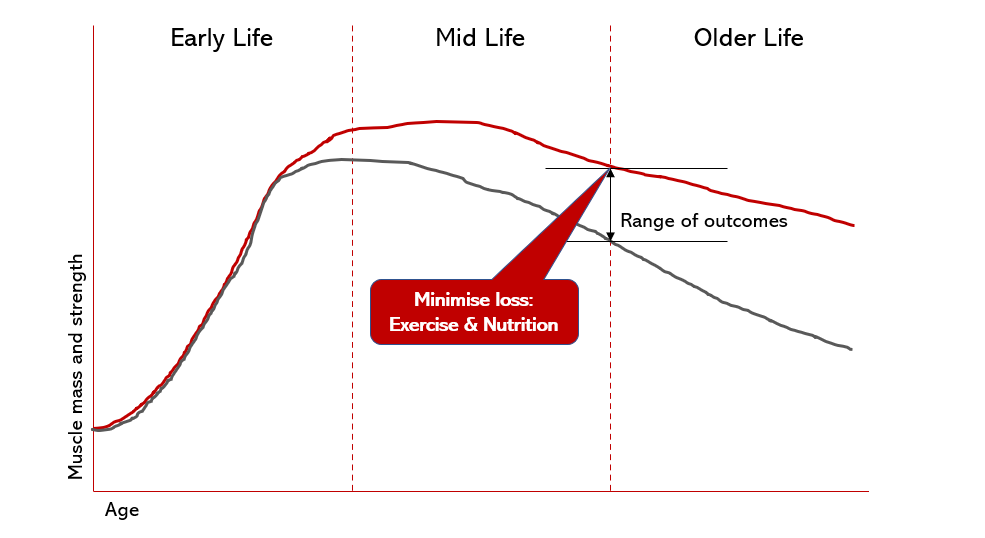
Sarcopenia (1) is a muscle disease, recognised officially in 2016 by the WHO (World Health Organisation). Starting as early as 30, resulting in muscle loss of around 3% - 5% each decade, even in active men. Sarcopenia speeds up in your sixties and can turbocharge in your seventies. Muscle decline can be as high as 10% - 15% in leg strength, increasing to 25% - 40% after age 70.
Driven by sarcopenia, by the age of 50 you could already be 6% - 10% down on muscle mass, even more in the legs, and growing.
GOT YOUR ATTENTION?
Not great news, but not everyone gets, or has to get Sarcopenia. Avoiding Sarcopenia means more healthspan in your lifespan.
Sarcopenia is a major factor in the development of frailty, which will affect your quality of life.
Illustrating the range of outcomes
KEY DRIVERS
- Age-related declines in hormones, such as testosterone and human growth hormone, all contribute to muscle maintenance and rebuilding. These hormones drop, so does muscle mass.
- Insulin resistance results in visceral fat mass.
- Neuronal decline in the spinal cord results in reduced function, which underlies decreased muscle strength, size, and mass.
5 EARLY SIGNS
- Harder to get out of the car?
- Can you stand up quickly from where you watch TV, then sit down, and then stand up again?
- Do you have difficulty lifting or carrying weights?
- Do you have difficulty climbing stairs?
Check out a questionnaire from ResearchGate here. Many Australians are not familiar with Sarcopenia, but it is real; it can make you weaker, affect your quality of life, and, as such, you might want to intervene and take active steps to avoid it as soon as possible.
SARCOPENIA-RELATED STUDIES
The importance of diet for muscle health has gained attention in the context of ageing, particularly in relation to Sarcopenia.
Is diet a modifiable factor to avoid Sarcopenia? The study found that it is, and that, on average, healthier diets are associated with a lower risk of Sarcopenia. Read the research on NCBI here.
3 THINGS YOU CAN DO
- Physical exercise, including resistance training.
- A healthy diet rich in protein.
- Active weight management.

Strength training is an effective intervention for improving strength, muscle mass, and quality of life, and for delaying the onset of Sarcopenia.
Sex and genetics will impact the response to strength training, but unless you have been advised against strength training by a medical professional with knowledge of your case, you really should get on with it. Ensure you maintain a physically active lifestyle.
Protein. Muscles need protein. Check your daily protein intake and supplement if needed. Check out how much protein to use here, and specifically learn about Leucine, an Amino Acid in protein to help you synthesise muscle and stay stronger for longer.
Diet and nutrition, eat a healthy diet rich in high quality proteins, and actively manage your weight.
Medical intervention through hormone treatment and supplementation, but this will require a visit to your doctor and adequate diagnosis.
Screening. Get your annual health check from a medical professional, and be upfront about any changes in your health.
Stay strong and read more about exercise and mindset on the Old Bull Health blog, featuring our health and performance coach, Donny Singe.


